Physical Address
304 North Cardinal St.
Dorchester Center, MA 02124
Physical Address
304 North Cardinal St.
Dorchester Center, MA 02124
Microsoft’s landmark announcement of a $15.2 billion data center expansion in Abu Dhabi marks a defining moment in the global cloud and artificial intelligence landscape. As AI accelerates, the world’s leading technology companies are searching for regions that can support massive computational demands. Abu Dhabi has emerged as one of those rare locations.
By 2026, the UAE will not only be a regional digital hub but a global benchmark for powering AI-driven economies. At the heart of Microsoft’s expansion lies a fundamental truth: the future of AI depends on energy, and the UAE has positioned itself as one of the few countries capable of providing the scale, stability, and sustainability required for hyperscale data operations.
While discussions around AI typically focus on compute power, algorithms, GPUs, and innovation, the most critical requirement remains energy.
A modern hyperscale AI data center consumes:
Microsoft’s expansion is not simply about building more servers. It is about ensuring that the energy ecosystem can sustain AI workloads for decades.
This is where the UAE offers a strategic advantage.
The UAE has been preparing for this moment for more than a decade. By 2026, the country’s energy landscape will be defined by:
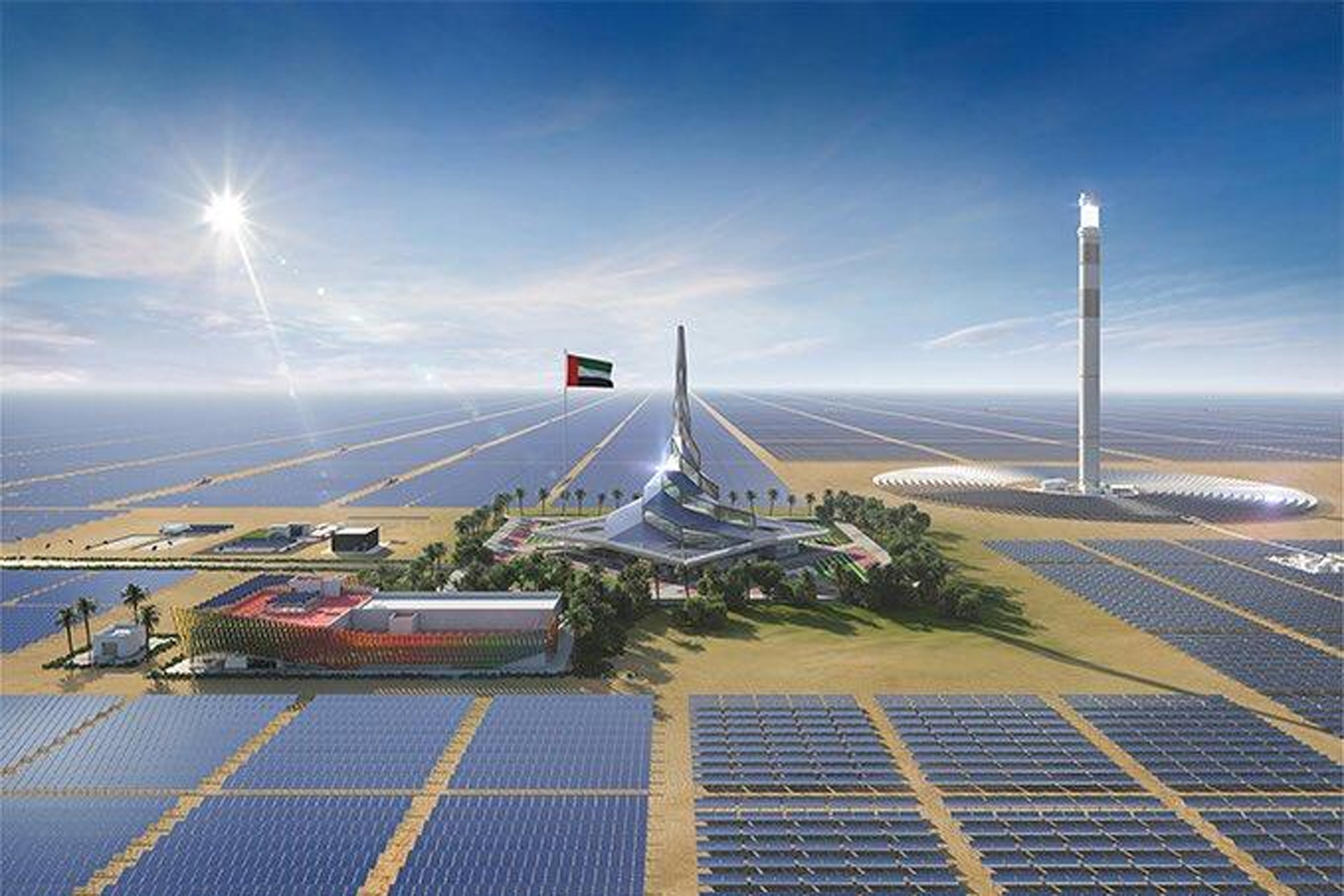
The UAE is home to some of the world’s largest solar power installations, including:
These projects generate extremely low-cost renewable electricity, giving the UAE a competitive advantage over countries with high energy pricing.
Barakah represents one of the most strategically important components of the UAE’s energy mix.
It provides:
For companies like Microsoft, the availability of clean nuclear baseload is critical.
Data centers require enormous cooling systems. Hot climates typically create challenges, but the UAE has invested heavily in:
These investments reduce operational costs and align with environmental commitments.
The UAE is implementing smart grid solutions that use AI to:
This forward-looking planning is exactly what attracts hyperscale technology firms.
Although Microsoft operates major cloud regions in Europe, the US, and Asia, Abu Dhabi offered something rare: a combination of energy availability, political stability, economic predictability, and long-term national vision.
Below are the core drivers of Microsoft’s decision.
AI data centers cannot operate in regions where electricity supply is unpredictable or excessively expensive. With nuclear, solar, and gas diversification, the UAE offers:
This long-term reliability reduces Microsoft’s operational risks.
From Abu Dhabi, Microsoft Azure can serve:
These regions represent billions of potential users and thousands of enterprises that are accelerating cloud and AI adoption.
The UAE government actively collaborates with global technology firms to build long-term digital ecosystems. This includes:
Microsoft’s investment aligns with national priorities such as the UAE Centennial 2071 vision and Artificial Intelligence Strategy 2031.
The UAE is not only consuming technology; it is building an economy around it. By 2026, the UAE plans to:
This long-term vision complements Microsoft’s strategic ambition to lead AI globally.
The world’s appetite for AI training and inference is rising sharply. The demand for energy is growing at a pace that many countries cannot satisfy.
AI clusters like GPT-level models require:
Most countries lack this infrastructure.
The UAE is preparing for it. By 2026, the nation’s energy mix will allow it to:
Microsoft’s $15.2B investment is not just a business move; it is an acknowledgment that the UAE is ready to power the AI era.
Microsoft’s expansion will reshape multiple sectors across the UAE.
The data center ecosystem will create roles in:
These are long-term, high-income jobs.
Startups will gain access to:
This will attract founders from across the Middle East and beyond.
UAE government departments will leverage Azure AI for:
By 2026, the UAE could become:
Microsoft’s presence elevates the UAE’s global digital standing.
Microsoft’s expansion highlights a new global reality:
The countries that control clean, stable, affordable energy will lead the AI revolution.
Data centers are not about servers. They are about power.
AI is not limited by human creativity. It is limited by electricity.
The UAE understands this, and Microsoft recognizes it.
The UAE’s ability to support hyperscale AI operations through sustainable energy, innovative infrastructure, and national strategy makes it one of the most attractive locations in the world for next-generation digital investments.
Microsoft’s $15.2B Abu Dhabi expansion reflects a partnership between technology and energy—a partnership that will define the global AI landscape in the coming decade.
As the world moves deeper into compute-intensive AI applications, countries like the UAE will increasingly shape the architecture of global cloud infrastructure.
The UAE is not just building data centers.
It is building the energy backbone of the AI economy.
Because the UAE offers stable energy, strong infrastructure, supportive regulatory frameworks, and long-term digital transformation vision, making it ideal for hyperscale AI centers.
AI operations consume enormous electricity. Without stable, affordable, and sustainable power, hyperscale data centers cannot operate efficiently.
Its mix of nuclear, solar, and AI-driven grid management creates one of the world’s most stable and diversified energy ecosystems.
Yes. Thousands of specialized roles in AI, cloud, cybersecurity, and infrastructure will be created over the next few years.
It will position the UAE as a global hub for AI compute, attract multinational tech companies, and accelerate national smart projects.






[…] tech companies suddenly rebrand because they must stay aligned with the future. They rebrand to explore new […]