Physical Address
304 North Cardinal St.
Dorchester Center, MA 02124
Physical Address
304 North Cardinal St.
Dorchester Center, MA 02124
Amazon’s Ring is once again at the center of a global privacy debate after unveiling its new face-scanning AI feature, designed to make home security smarter, faster, and more automated. The company claims the technology will enhance safety by identifying familiar faces, alerting homeowners with greater accuracy, and reducing false notifications. However, the rollout has ignited significant concern among privacy advocates, cybersecurity experts, and digital rights organizations.
The latest upgrade raises a critical question:
How much security are we willing to trade for convenience?
As Ring expands into AI-powered surveillance, the future of smart home security becomes more complex, blending advanced recognition technologies with heightened risks of data misuse, bias, and government overreach.
Ring’s face-scanning AI is an advanced feature integrated into the company’s popular video doorbells and security cameras. It utilizes machine learning algorithms to detect, analyze, and recognize human faces captured by the device. The system is built to:
Amazon positions this feature as a leap forward in home surveillance, offering homeowners more control and awareness over who approaches their property.
But while the technology promises efficiency, it introduces concerns that traditional security cameras never faced.
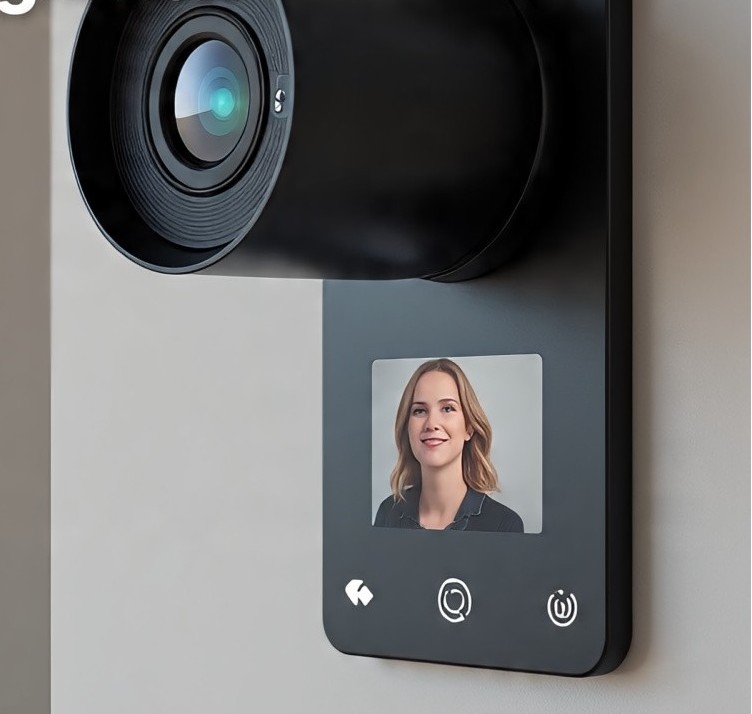
Ring’s face-scanning relies on three core AI processes:
The camera identifies when a human face appears in its field of view. This is the simplest part, recognizing general facial shapes.
The AI scans facial landmarks including eye positioning, jawline structure, and unique ratios. This creates a “faceprint” a mathematical representation of an individual’s features.
The system compares the captured faceprint to stored profiles in the user’s Ring cloud account. If a match is found, the device sends a label such as “John is at your door.”
This process takes milliseconds and relies heavily on Amazon’s cloud processing power.
The move is part of Amazon’s broader strategy to compete with smart home giants like Google Nest and Apple HomeKit. As security expectations evolve, consumers want:
Additionally, Amazon’s investment in AI and machine learning positions Ring as a testing ground for future smart home technologies.
However, timing also matters. The world is increasingly aware of surveillance technologies and their consequences. Introducing face recognition today automatically attracts scrutiny.
Amazon highlights several advantages that come with face-scanning integration:
Ring’s system reduces false alerts from:
With face recognition, homeowners receive only relevant notifications.
Since the device knows who is at the door, it can alert users instantly without requiring manual review.
Homeowners can identify:
This creates a more personalized security experience.
With recognition, future integrations could:
These automations make the home more intuitive.
Despite its convenience, Ring’s face-scanning AI raises significant concerns that cannot be ignored.
One of the biggest risks involves biometric data faceprints stored on Amazon’s cloud servers.
Unlike passwords, biometric identifiers cannot be changed if compromised.
If a faceprint database is hacked, the damage is long-lasting.
Many privacy experts argue that storing biometric data for consumer devices is unnecessary and dangerous.
Ring has previously faced backlash for sharing video footage with police departments sometimes without user consent.
With biometric recognition, the stakes become much higher. Critics worry that:
This creates an environment where corporate convenience intersects with public surveillance.
Facial recognition systems have historically shown higher error rates for:
These inaccuracies can lead to false identification, creating safety risks and potential legal issues.
Ring has not publicly disclosed the accuracy rates of its facial recognition model, raising doubts about performance consistency.
Another major concern is the lack of consent.
When a visitor approaches a home with a Ring device, they may not know:
This raises legal and ethical concerns, especially in regions with strict privacy laws.
Ring cameras are already widely used in neighborhoods. The addition of facial scanning transforms local surveillance networks into far more complex monitoring systems.
This trend raises long-term questions:
These societal implications cannot be dismissed lightly.
Cybersecurity analysts argue that Ring’s face-scanning AI could be a turning point for consumer surveillance. While some appreciate the technological advancement, many warn that the risks outweigh convenience.
Digital rights groups emphasize that:
Experts also highlight the lack of clear transparency regarding how Amazon will use or protect these faceprints.
The introduction of facial recognition in consumer products has triggered responses from:
Some countries may introduce stricter laws surrounding biometric data collection.
Regions like the EU, where GDPR is enforced, may challenge aspects of the technology.
Amazon’s decision reflects a growing shift in smart home technology: devices are becoming more intelligent, but also more intrusive.
The future may include:
This potential evolution raises critical ethical questions about the role of AI in private spaces.
Amazon’s Ring face-scanning AI offers a significant leap in smart home convenience and security. It demonstrates how AI can transform daily living by reducing false alerts, simplifying visitor management, and improving automation.
Yet, it also represents a major privacy challenge.
Balancing innovation and privacy will define the future of home surveillance. While Ring’s technology is impressive, it forces society to confront deeper questions about biometric security, consent, and the expanding reach of AI.
Homeowners must now decide:
Is enhanced security worth the risk of exposing your identity to machines?
Yes. Ring stores faceprint data in its cloud servers, raising concerns about long-term security and potential misuse.
Ring has previously shared video footage with police. Access to face-scanning data remains unclear, causing privacy concerns.
Amazon has not released specific accuracy rates. Historically, facial recognition has shown biases, especially for women and minorities.
Generally, no. Visitors are often unaware that their facial data may be analyzed or stored.
Availability may vary by region due to regulations such as GDPR, which restrict facial recognition practices.






[…] a decisive move in the global artificial intelligence race by selecting Amin Vahdat as its Chief AI Infrastructure Technologist. This appointment marks a significant milestone in Google’s evolving strategy to […]
[…] discussion not only about the specific event itself, but also about broader issues surrounding AI hype, technological credibility, transparency in tech exhibitions, and public trust in artificial […]
[…] Amazon Ring’s Facial Recognition Upgrade: What Users Need to Know […]
[…] Amazon Ring’s Facial Recognition Upgrade: What Users Need to Know […]