Physical Address
304 North Cardinal St.
Dorchester Center, MA 02124
Physical Address
304 North Cardinal St.
Dorchester Center, MA 02124
Social media was supposed to connect us. Instead, it’s now being accused of trapping us.
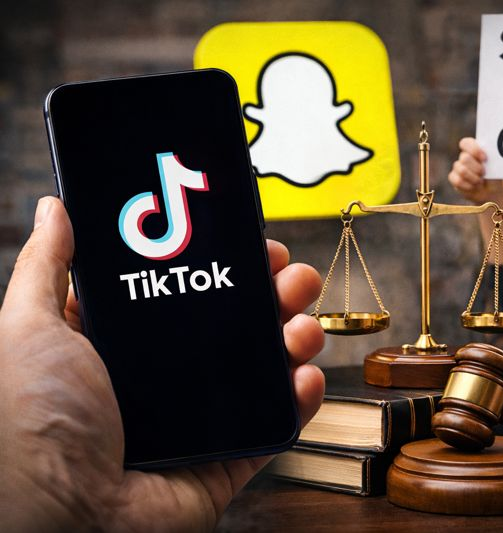
Over the last few years, lawsuits targeting major tech platforms have exploded, all circling around one powerful claim: social media addiction. When Snap agreed to settle a lawsuit tied to these concerns, it sent shockwaves across Silicon Valley. Now, TikTok following the same path isn’t just news it’s a signal.
A signal that the rules of the game are changing.
The honeymoon phase of social media is over. Regulators, parents, and mental health experts are asking uncomfortable questions. Are platforms intentionally designed to be addictive? Are they harming children? And if so, who’s responsible?
These questions are now being debated not just on talk shows, but in courtrooms.
Endless scrolling. Autoplay videos. Notifications that never stop. These features aren’t accidents. They’re carefully engineered, and lawsuits argue they exploit human psychology for profit.
TikTok’s lawsuit centered on claims that the platform knowingly encouraged addictive behavior, especially among young users. The argument wasn’t that TikTok exists but that how it exists causes harm.
At the core, the lawsuits allege that TikTok’s algorithm creates compulsive usage patterns. Users don’t just enjoy the app they feel unable to stop.
Children and teenagers are the most affected. Their brains are still developing, making them more susceptible to dopamine-driven content loops.
Parents, advocacy groups, and public entities stepped forward, arguing that platforms failed to warn users about risks while actively promoting excessive use.
Before TikTok, there was Snap.
Snap’s settlement didn’t admit wrongdoing, but it acknowledged the seriousness of the claims. It included commitments to improve safety features and transparency.
Once one company settles, others take notice. Snap’s move made it clear: fighting these cases endlessly could be worse than settling.
TikTok’s decision wasn’t weakness it was strategy.
Long trials mean bad headlines. Settling allows TikTok to control the narrative instead of letting it spiral.
Court cases drag on for years. Settlements offer faster closure and fewer reputational scars.
Compared to potential fines, regulatory crackdowns, and user backlash, settlement costs can feel like damage control.
Addiction isn’t just about substances anymore.
Every swipe promises something better. That anticipation keeps users hooked, similar to slot machines.
TikTok’s algorithm learns what excites you and feeds it back nonstop. The brain gets rewarded, again and again.
Short videos reset attention constantly. There’s no natural stopping point, which makes quitting harder.
Algorithms are the engine behind the addiction claims.
It tracks watch time, pauses, replays, and reactions. Then it serves content designed to keep you glued.
The feed feels personal because it is. That personalization increases emotional attachment and dependency.
This is where the concern gets serious.
Studies have linked heavy usage to anxiety, depression, and low self-esteem among teens.
Late-night scrolling steals sleep. Poor sleep fuels mental health issues. It’s a vicious cycle.
Lawmakers are no longer watching quietly.
Governments worldwide are drafting laws aimed at protecting minors online.
Expect stricter age verification, time limits, and transparency requirements.
Settlements aren’t just paperwork they change apps.
Users may see more screen-time reminders and usage warnings.
Parents are being given more tools to manage how kids use the platform.
TikTok isn’t alone in the spotlight.
If TikTok and Snap can be sued, others can too. This opens the door wide.
Platforms now have to balance engagement with responsibility.
Legal issues ripple through finances.
Settling can actually reassure investors by reducing uncertainty.
Brands want safe platforms. Legal drama threatens that trust.
People are paying attention.
More users are questioning how much control apps have over their lives.
The debate is no longer niche it’s mainstream.
That’s the million-dollar question.
Designing for wellbeing instead of addiction is possible but harder.
Users have choices, but companies design the environment. Both matter.
The message is loud and clear.
Hidden algorithms are now legal liabilities.
The balance is shifting, slowly but surely.
This is just the beginning.
Expect more lawsuits, more rules, and more scrutiny.
Regulation won’t stop at borders. Global platforms face global rules.
TikTok settling the social media addiction lawsuit marks a turning point. It shows that even the biggest platforms can’t ignore the human cost of digital engagement. Like a mirror held up to the industry, this moment forces tech companies to confront a hard truth: attention is powerful, and with power comes responsibility.
1. Why did TikTok settle the social media addiction lawsuit?
To avoid long legal battles, protect its brand, and respond to growing regulatory pressure.
2. Does the settlement mean TikTok admitted wrongdoing?
No, settlements usually do not include an admission of guilt.
3. How does social media addiction affect mental health?
It can increase anxiety, depression, sleep issues, and attention problems, especially in teens.
4. Will TikTok change its algorithm after the settlement?
Users may see changes like screen-time limits, warnings, and more safety-focused features.
5. Could other platforms face similar lawsuits?
Yes, this settlement increases the likelihood of future lawsuits against other social media companies.