Physical Address
304 North Cardinal St.
Dorchester Center, MA 02124
Physical Address
304 North Cardinal St.
Dorchester Center, MA 02124
For years, TikTok has been at the center of one of the most intense tech and political battles of the decade. Governments debated. Lawmakers warned. Users worried. And brands watched closely. Now, the conversation has reached a dramatic moment: TikTok is finally being sold to U.S. ownership to avoid a nationwide ban.
This move, while not entirely unexpected, marks a major shift in the global technology landscape. It is not just about one app it is about data control, national security, digital power, and the future of global platforms.
The agreement, first revealed by multiple media outlets, was officially confirmed through an internal memo sent by TikTok CEO Shou Zi Chew to employees on Thursday. According to the memo, TikTok aims to finalize the deal by January 22, 2026.
As part of the arrangement, a new company named TikTok USDS Joint Venture LLC will be established. This new US-based entity will be jointly owned by a group of American investors, existing ByteDance shareholders, and ByteDance itself.
Under the proposed ownership model, 50 percent of the joint venture will be controlled by a consortium of new US investors. This group includes Oracle, Silver Lake, and MGX, with each firm holding a 15 percent stake.
Affiliates connected to certain current ByteDance investors will collectively own 30.1 percent, while ByteDance will retain a 19.9 percent minority stake, keeping it below the controlling threshold.
TikTok temporarily shut down its services in the United States earlier this year after missing previous divestment deadlines. Following this, US President Donald Trump granted the company several deadline extensions to complete a compliant transaction.
In September, the United States and China reached a preliminary framework agreement, leading to another extension that expired on December 16. The newly finalized agreements are designed to meet the conditions outlined in an executive order signed on September 25, 2025.
TikTok’s troubles in the United States did not begin overnight. For years, U.S. officials raised concerns about the app’s Chinese ownership through ByteDance.
The main concerns were:
TikTok repeatedly stated that U.S. user data was protected, but skepticism remained strong in Washington.
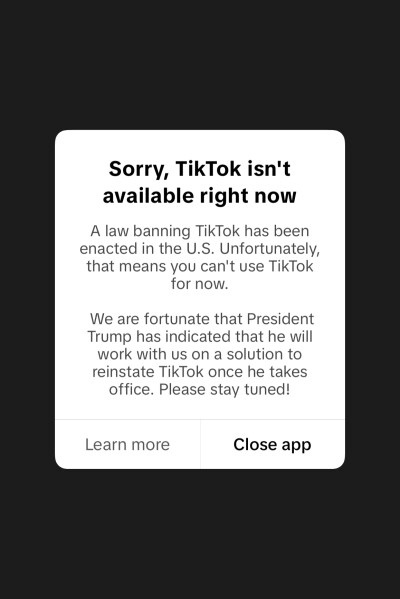
As political pressure increased, U.S. lawmakers made their position clear:
TikTok could either change ownership or face removal from U.S. app stores.
This was no longer a theoretical threat. Proposed legislation and deadlines created a situation where selling the U.S. operations became the only realistic option.
For ByteDance, the choice was painful but strategic:
The sale became a survival decision.
It’s important to clarify something:
TikTok is not disappearing, and it is not being shut down.
The sale refers to:
This means TikTok will operate under U.S.-based ownership and oversight, reducing foreign control and satisfying regulatory demands.
The app users know remains but the power behind it changes.
While official details may evolve, discussions have consistently pointed toward:
The goal is clear: place TikTok under American legal and corporate control, ensuring compliance with U.S. laws and data protection standards.
This structure allows TikTok to continue operating while addressing government concerns.
This is not just about TikTok.
The U.S. sees control over major digital platforms as:
TikTok became the test case.
If a platform with over 100 million U.S. users could not guarantee control and transparency, lawmakers feared setting a dangerous standard.
The deal is expected to close within 120 days of the executive order, subject to final regulatory approvals. The US joint venture will be overseen by a seven-member board of directors, with most board members being American nationals.
This board will have authority over key areas such as data protection, algorithm security, content moderation, and software integrity for US users.
For everyday users, the short-term experience is unlikely to change dramatically.
Expected outcomes:
However, behind the scenes:
In simple terms: users keep TikTok, but TikTok plays by new rules.
Creators are among the biggest stakeholders in this transition.
The sale provides:
Many creators had already begun diversifying to other platforms due to uncertainty. This move restores trust and keeps TikTok attractive for long-term content strategies.
One of the biggest questions is the algorithm the secret sauce behind TikTok’s success.
While details remain guarded:
This could slightly change how content is recommended, but it also builds trust with regulators and advertisers.
This deal sets a global precedent.
Governments around the world are watching closely. The message is clear:
Platforms that operate at massive scale must align with local laws and data governance expectations.
This could influence:
TikTok is just the beginning.
For ByteDance, the sale is a mixed outcome.
Losses:
Gains:
Sometimes, survival matters more than control.
Advertisers value stability above all else.
Before the sale:
After the sale:
This is critical for TikTok’s revenue model.
Stricter oversight often leads to:
While TikTok already moderates content, U.S. ownership could result in:
This may affect some content categories but improves platform longevity.
Yes and that’s why this story matters.
Any global platform with:
could face similar scrutiny.
Governments are no longer passive observers in the digital economy.
Public opinion is divided:
But most agree on one thing: TikTok’s future is now more certain than it was before.
This sale signals a new era where:
Social media is no longer just entertainment it is infrastructure.
TikTok being sold to U.S. ownership to avoid a ban is more than a business deal. It is a defining moment for digital platforms worldwide.
The app survives. Users stay. Creators continue.
But the rules of the game have changed.
In the future, global platforms will need to balance:
TikTok’s story proves that in today’s world, technology cannot exist without politics and politics cannot ignore technology.
TikTok is being sold to a US entity to address national security and data privacy concerns raised by US lawmakers.
A full ban was under serious consideration, but selling TikTok’s US operations is seen as a way to avoid it.
Reports suggest US-based investors or companies are involved, though final ownership details depend on regulatory approval.
Yes, TikTok is expected to continue operating normally for users and creators in the US.
User data is expected to be stored and managed within the US under stricter data protection rules.
No, the deal mainly impacts TikTok’s US operations. Global users are unlikely to see major changes.
US officials were concerned about potential access to user data by foreign governments.
The core algorithm is expected to remain the same, though oversight and transparency may increase.
Creators should not be affected negatively; monetization and reach are expected to continue as usual.
No, TikTok has faced similar threats before, but this is the most serious attempt to force a sale.



[…] TikTok Is Finally Being Sold to the US to Avoid a Nationwide Ban […]
[…] TikTok Is Finally Being Sold to the US to Avoid a Nationwide Ban […]