Physical Address
304 North Cardinal St.
Dorchester Center, MA 02124
Physical Address
304 North Cardinal St.
Dorchester Center, MA 02124

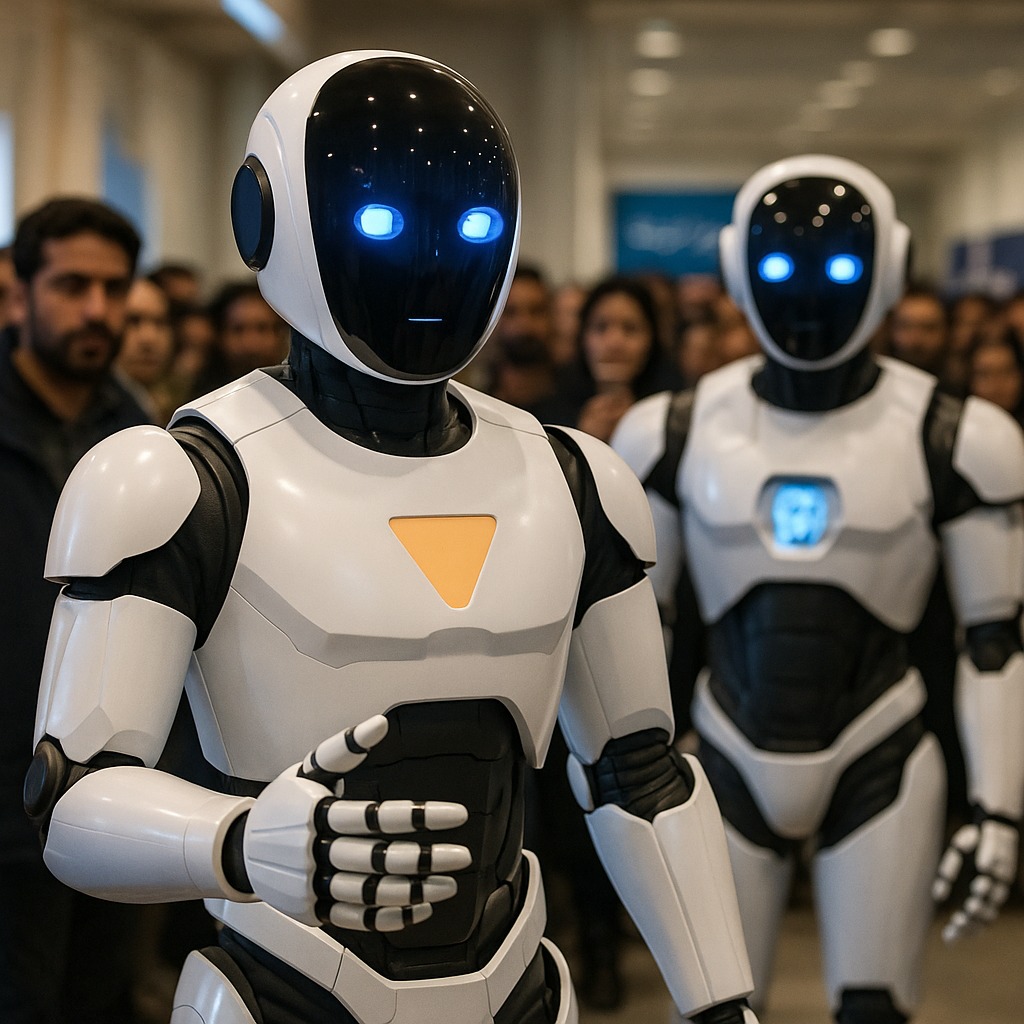
The global technology community was recently captivated by a surprising and controversial moment at an Iranian technology exhibition that quickly went viral across social media platforms. What was initially promoted as a showcase of advanced artificial intelligence robots turned into a worldwide talking point after observers discovered that the so-called humanoid AI machines were, in reality, humans wearing robotic costumes.
The incident sparked intense discussion not only about the specific event itself, but also about broader issues surrounding AI hype, technological credibility, transparency in tech exhibitions, and public trust in artificial intelligence. In an era where AI breakthroughs dominate headlines, this episode highlights the growing gap between expectations and reality and why authenticity matters more than ever.
The controversy began at a technology expo in Iran where event organizers presented what they described as advanced AI-powered humanoid robots. These figures were displayed interacting with attendees, posing for photos, and moving through the exhibition space. At first glance, the presentation appeared impressive, aligning with the futuristic imagery commonly associated with robotics and artificial intelligence.
Videos of the robots quickly circulated online, drawing attention for their human-like appearance and behavior. However, within hours, technology enthusiasts, engineers, and social media users began questioning the authenticity of the demonstration.
Close inspection of the footage revealed subtle details that raised doubts:
Eventually, it became clear that the “robots” were not autonomous machines at all, but people dressed in robotic suits, performing for the audience.
Once this information surfaced, the story spread rapidly across international media, transforming the expo from a tech showcase into a viral controversy.
Several key factors contributed to the story’s explosive reach.
AI has become one of the most influential and closely watched technologies of the decade. Any claim involving advanced AI or humanoid robotics naturally attracts global attention, especially when it suggests a major breakthrough.
The contrast between expectation and reality played a major role. The robotic costumes were visually convincing at first glance, which made the revelation more surprising and shareable.
Short clips, reaction videos, memes, and side-by-side comparisons spread rapidly on platforms like X, TikTok, YouTube, and Instagram. Once skepticism emerged, engagement multiplied.
Audiences today are increasingly wary of exaggerated tech claims. When authenticity is questioned, stories move beyond curiosity and into criticism.
Technology expos are more than exhibitions; they are often used to project innovation, progress, and technological capability. Around the world, governments and organizations leverage such events to:
In this context, the Iran Tech Expo incident carried symbolic weight. For some observers, it raised concerns about the pressure on nations and organizations to appear competitive in the global AI race, even when actual technological maturity may lag behind expectations.
This pressure can sometimes lead to exaggerated presentations, conceptual displays presented as reality, or ambiguous demonstrations that blur the line between art and engineering.
To understand why the claims faced immediate scrutiny, it is important to consider the current state of humanoid robotics.
Despite major investments by leading global technology companies, fully autonomous humanoid robots remain extremely complex and expensive. Key challenges include:
Even the most advanced robots today typically operate in controlled environments and require extensive supervision. Fully independent humanoid robots capable of seamless interaction are still largely experimental.
This reality makes sudden claims of advanced, production-ready humanoid AI systems difficult to accept without extensive evidence.
The public response unfolded in multiple stages.
Many online users reacted with humor, creating memes and jokes about “AI robots powered by humans.” While lighthearted, this phase helped push the story into mainstream awareness.
Engineers and AI experts soon joined the discussion, pointing out that misleading demonstrations undermine genuine innovation. Critics emphasized that such presentations risk damaging trust in real AI research.
The conversation expanded to broader questions:
This incident reflects deeper challenges within the AI ecosystem.
AI systems increasingly influence healthcare, finance, transportation, and governance. Public trust is essential for widespread adoption, and misleading demonstrations weaken that trust.
The AI industry already faces inflated expectations. Overpromising and underdelivering creates skepticism, making it harder for real innovations to gain acceptance.
For regions working to build technology ecosystems, credibility matters more than spectacle. Short-term attention gained through exaggeration can harm long-term growth.
One positive outcome of the incident was the speed at which online audiences analyzed and verified claims. Viewers compared footage, discussed technical limitations, and shared expert opinions.
This reflects a growing trend:
Audiences are becoming more technologically literate and less willing to accept claims at face value.
As AI becomes more integrated into daily life, people increasingly ask:
This shift ultimately benefits the technology industry by encouraging higher standards.
The Iran Tech Expo controversy offers valuable lessons.
If a display is conceptual, artistic, or illustrative, it should be clearly presented as such. Transparency strengthens trust, even when technology is still in development.
Working prototypes, even with limitations, generate more respect than theatrical demonstrations that exaggerate capabilities.
In the digital era, every demonstration is global. Claims will be recorded, analyzed, and debated in real time.
Yes. Clear communication could have reshaped the narrative entirely.
If the exhibition had framed the display as:
The response would likely have focused on creativity rather than criticism.
The race for leadership in artificial intelligence is intense. Governments, startups, and multinational corporations are competing for:
This pressure can sometimes lead to premature announcements or exaggerated claims. However, history shows that sustainable leadership in technology comes from measurable progress, research transparency, and real-world applications, not viral moments.

Going forward, technology exhibitions are likely to evolve. We may see:
Such changes would help rebuild confidence and support healthy innovation.
The viral moment at the Iran Tech Expo, where “advanced AI robots” were revealed to be humans in costumes, is more than an internet curiosity. It highlights the growing tension between technological ambition and public accountability.
While the incident drew criticism, it also sparked meaningful discussions about honesty, trust, and the real state of AI development. In a world increasingly shaped by artificial intelligence, transparency is not optional it is essential.
True innovation does not rely on illusion. It is built on research, evidence, and credibility.
As the global AI landscape continues to evolve, events like this serve as reminders that progress is measured not by how impressive something looks, but by how truthfully it is presented.






[…] Iran Tech Expo Goes Viral After ‘Advanced AI Robots’ Are Revealed to Be Humans in Costumes […]
[…] Iran Tech Expo Goes Viral After ‘Advanced AI Robots’ Are Revealed to Be Humans in Costumes […]