Physical Address
304 North Cardinal St.
Dorchester Center, MA 02124
Physical Address
304 North Cardinal St.
Dorchester Center, MA 02124
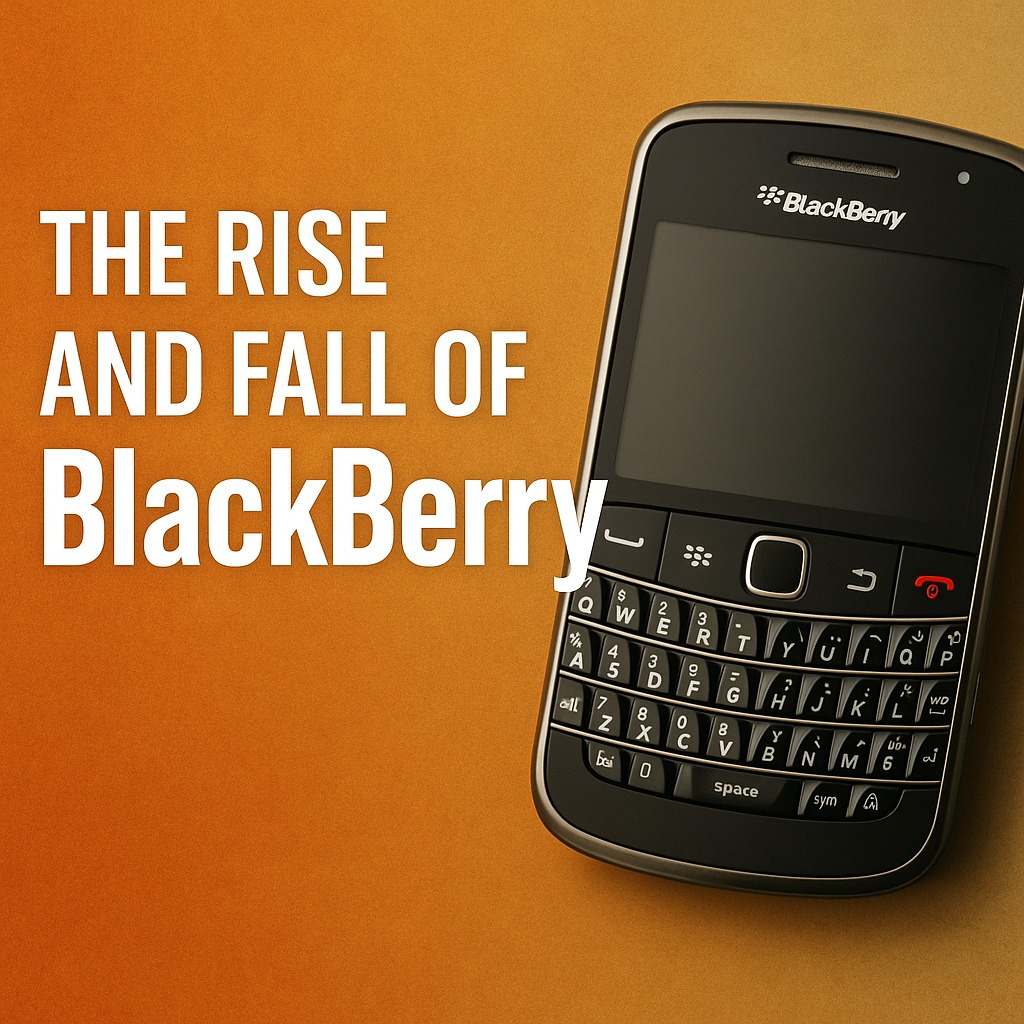
BlackBerry was not just a smartphone it was a status symbol, a productivity powerhouse, and the gold standard for secure mobile communication. Business leaders, politicians, and governments trusted BlackBerry more than any other device on the market. At its peak, BlackBerry dominated global smartphone sales and defined how professionals communicated.
Yet today, BlackBerry is no longer a major smartphone player. Its journey from unmatched success to dramatic decline stands as one of the most important case studies in technology history. Understanding why BlackBerry rose so quickly and why it fell so hard offers powerful lessons about innovation, leadership, market disruption, and the cost of ignoring change.
BlackBerry was developed by Research In Motion (RIM), a Canadian company founded in 1984. Initially focused on wireless data technology, RIM identified a major gap in mobile communication: secure, real-time email on the go.
Before smartphones became mainstream, mobile devices were limited in functionality. BlackBerry changed that by introducing:
These features addressed a critical need for businesses and governments that required speed, security, and reliability.
BlackBerry’s growth was not accidental. It was built on clear value creation.
BlackBerry became the preferred device for:
Its encrypted communication system made it nearly impossible to intercept messages, creating unmatched trust.
BBM was revolutionary. It offered:
Long before WhatsApp or iMessage, BBM connected millions of users worldwide.
BlackBerry’s keyboard allowed fast, accurate typing especially for professionals sending emails all day.
Telecom operators promoted BlackBerry heavily because it drove data usage and enterprise subscriptions.
By the late 2000s, BlackBerry controlled a massive share of the global smartphone market and was seen as untouchable.
The smartphone market changed dramatically with the arrival of new competitors.
When Apple introduced the iPhone, it redefined what a smartphone could be:
BlackBerry underestimated this shift. Leadership believed touchscreens were a passing trend and that business users would never abandon physical keyboards.

Android followed quickly, offering:
Together, Apple and Android reshaped consumer expectations something BlackBerry failed to fully recognize in time.
BlackBerry’s decline was not caused by one mistake, but by a series of critical strategic failures.
BlackBerry did not prioritize building a strong app ecosystem. While Apple and Google attracted developers, BlackBerry’s platform lagged far behind in app availability and innovation.
BlackBerry assumed corporate clients would never switch. However, employees began demanding devices that offered better user experiences, forcing companies to adapt.
BlackBerry’s operating system struggled to evolve. Updates were slow, and user interfaces felt outdated compared to competitors.
Internal disagreements slowed decision-making. The company hesitated between preserving its legacy systems and adopting radical change.
When BlackBerry finally introduced touchscreen devices, competitors were already years ahead in design, usability, and developer support.
As competitors gained momentum:
Once trust in BlackBerry’s future weakened, the decline accelerated rapidly. Market share dropped year after year, and the brand’s influence faded.

BlackBerry made several attempts to reverse its decline.
The company launched a new operating system designed to modernize the user experience. While technically impressive, it arrived too late to regain lost ground.
BlackBerry eventually adopted Android, but by then:
The move failed to restore BlackBerry’s former dominance.
While BlackBerry failed as a smartphone manufacturer, it did not disappear entirely. The company shifted its focus toward:
This pivot allowed BlackBerry to survive by leveraging its expertise in security and reliability, albeit far from its original consumer fame.
BlackBerry’s story offers powerful lessons for modern technology companies.
No company is immune to disruption. Continuous innovation is essential.
Even enterprise products must evolve with user expectations.
Apps, developers, and platforms define long-term success.
Delayed decisions can permanently damage competitive position.
Ignoring emerging trends can destroy even the strongest brands.
BlackBerry’s rise and fall continues to influence how companies approach:
In an era dominated by artificial intelligence, cloud computing, and automation, BlackBerry’s story serves as a warning: technical excellence alone is not enough without adaptability.
BlackBerry’s journey from industry leader to cautionary tale is one of the most significant stories in technology history. It reminds us that dominance can vanish quickly when companies fail to adapt to change.
While BlackBerry no longer defines the smartphone market, its legacy remains an important chapter in the evolution of mobile technology. Its rise showed how innovation can reshape industries, and its fall demonstrated the consequences of ignoring transformation.
For today’s tech leaders and startups, BlackBerry’s story is not just history it is a lesson.
BlackBerry became popular because it offered secure email, reliable messaging, long battery life, and a physical keyboard that appealed strongly to business users and government organizations.
BlackBerry’s biggest advantage was its secure communication system, which made it the most trusted smartphone brand for enterprises and governments.
BlackBerry failed to compete because it underestimated touchscreen smartphones, ignored the importance of app ecosystems, and was slow to adapt its software and design.
Yes, BlackBerry focused heavily on enterprise customers and underestimated the shift toward consumer-centric smartphones with rich app experiences.
A weak app ecosystem discouraged developers and users, making BlackBerry devices less attractive compared to Apple’s App Store and Google Play.
BlackBerry’s market share began declining rapidly after 2010, as iOS and Android devices gained global popularity.
Yes, BlackBerry launched the BlackBerry 10 operating system and later adopted Android, but these efforts came too late to regain its former position.
Today, BlackBerry focuses on cybersecurity, enterprise software, and automotive operating systems rather than consumer smartphones.
Companies can learn the importance of adapting to market change, listening to consumers, investing in ecosystems, and innovating continuously.
BlackBerry’s story remains relevant because it shows how even industry leaders can fail if they resist change and underestimate disruptive technologies.






[…] The Rise and Fall of BlackBerry: How a Smartphone Giant Lost Its Crown […]
[…] The Rise and Fall of BlackBerry: How a Smartphone Giant Lost Its Crown […]
[…] has confirmed that its satellite internet service, Starlink, has crossed 9 million active users worldwide, marking one of the fastest expansions of any communications network in […]