Physical Address
304 North Cardinal St.
Dorchester Center, MA 02124
Physical Address
304 North Cardinal St.
Dorchester Center, MA 02124
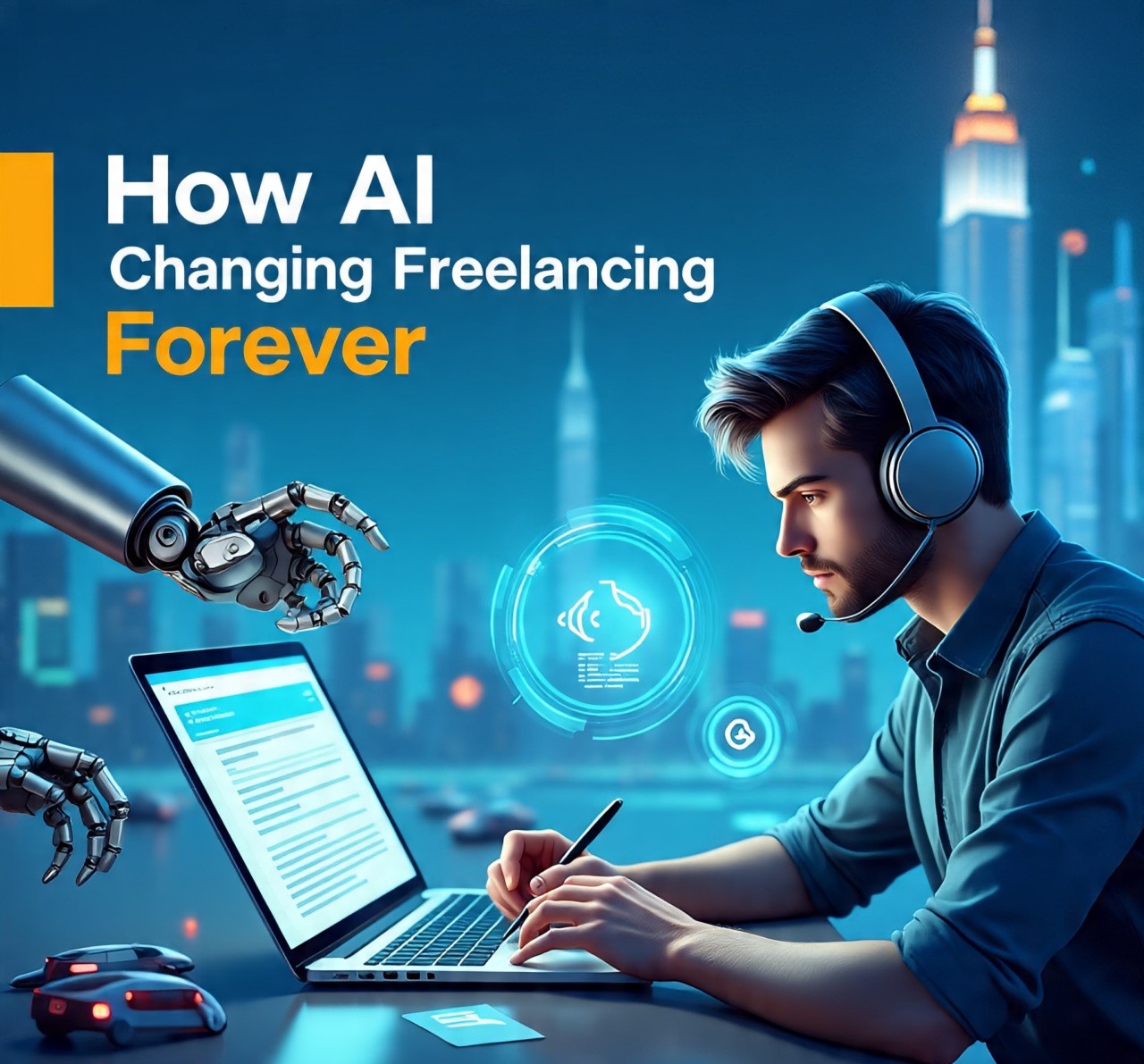
The freelancing world is experiencing one of the biggest transformations in history, and the force behind this shift is Artificial Intelligence. For years, freelancers relied on traditional methods such as manual research, slow project delivery, and time consuming communication. Today, AI has replaced and improved many of these processes, giving freelancers new opportunities and new challenges.
The impact of AI on freelancing is not small. It affects every aspect of online work, from skill demand and project management to client expectations and competition. Whether a freelancer works in writing, design, development, marketing, or customer support, AI is now a part of their daily workflow.
One of the biggest changes AI has brought to freelancing is the shift in the types of skills that clients value. Traditional skills like basic content writing, simple graphic design, or manual data entry are no longer enough. Clients now expect freelancers to use AI tools to improve quality and efficiency.
For example, a content writer today is not just expected to write; they must know how to use AI research tools, grammar systems, SEO analyzers, and content optimization platforms. Similarly, designers are expected to use AI-powered design tools to create fast variations, analyze brand identity, and deliver design concepts within hours, not days.
AI has not killed skills; it has upgraded them. Freelancers who learn AI quickly become more competitive, while those who ignore AI fall behind. This is why AI literacy is becoming one of the most demanded skills in modern freelancing.
AI has changed the speed of work. What previously took five hours can now be done in thirty minutes with the help of the right tools. This increased productivity is one of the biggest advantages for freelancers.
Writers use AI for idea generation, outlines, editing, and SEO optimization. Designers use AI for brainstorming, color matching, and layout suggestions. Programmers rely on AI code assistants to detect bugs, improve efficiency, and automate repetitive tasks.
The faster a freelancer works, the more projects they can complete. This increases monthly income and helps freelancers maintain strong relationships with clients who appreciate quick delivery without compromising quality.
AI is not replacing freelancers it is helping them work smarter, faster, and better.

Before AI, clients understood the time required for research, planning, or concept creation. Now, because they see AI producing ideas or drafts instantly, they expect freelancers to work faster than ever. This increased expectation has completely changed the freelance marketplace.
Clients now prefer freelancers who:
If a freelancer continues using old, slow methods, their chances of getting hired decrease significantly. AI has raised the performance standard in freelancing, and modern clients want efficiency, speed, and innovation.
AI has introduced hundreds of powerful tools designed specifically for freelancers. These tools automate tasks that used to take hours, allowing freelancers to focus on creativity and strategy.
Some examples include:
These tools help freelancers complete complex tasks with simplicity. For example, an AI writing tool can handle outlines, keyword research, and tone improvement within minutes. A design tool can generate multiple creative concepts with a single prompt. A coding assistant can write entire functions based on developer instructions.
This level of support was impossible before AI, and it has completely changed how freelancers work.
AI makes freelancing easier, faster, and more accessible. While this is great, it also increases competition. Many new freelancers enter the market because AI tools help them work like professionals even if they are beginners.
This means experienced freelancers must differentiate themselves through creativity, strategic thinking, and unique problem-solving qualities AI cannot replace.
To stand out, freelancers must:
The freelancers who combine their own expertise with AI-powered efficiency will always stay ahead of competitors.
While some tasks are becoming automated, AI is also creating entirely new opportunities for freelancers. New high-paying freelance skills are emerging due to AI’s growth. These include:
These new professions did not even exist a few years ago, but today, companies are hiring freelancers specifically for AI-related projects. This means the future of freelancing will open even more opportunities for those who adapt quickly.
One of the most important benefits of AI in freelancing is improved accuracy. Whether it’s writing, coding, designing, or analyzing data, AI helps freelancers reduce errors and improve quality. Tools like grammar checkers, code analyzers, and design evaluators ensure that the final outcome is polished and professional.
Clients appreciate accuracy and consistency, which makes AI a valuable partner for freelancers. Instead of spending hours on corrections, freelancers can now focus on innovation and creativity.
AI is not going anywhere; it will become stronger, smarter, and more deeply integrated into every freelance skill. Future freelancers will need to embrace AI not as a competitor but as an essential tool. Those who adapt will grow. Those who resist will eventually become outdated.
In the next decade, freelancing will be defined by:
AI is shaping a future where freelancers can work globally, earn more, and create more innovative outcomes than ever before.
AI is permanently changing the freelancing industry. It speeds up work, improves quality, increases opportunities, and transforms client expectations. But it also increases competition, demands new skills, and requires freelancers to stay updated.
The future belongs to freelancers who understand how to combine their talent with AI technology. By embracing this shift, freelancers can build stronger careers, earn more, and stay ahead in the rapidly evolving digital world.





[…] giants such as Facebook becoming Meta, Google restructuring into Alphabet, Twitter transforming into X, and Snapchat becoming Snap Inc. are strong examples of rebrands that […]
[…] you focus on niche clarity, strong samples, SEO optimization, and professional presentation, you will build a portfolio that stands out in the competitive […]
[…] how businesses operate and how individuals interact with the digital world. The phrase “What’s Next Is Now” perfectly captures this […]
[…] time a technology takes over the routine parts of a job, it tends to create new work built around managing, directing, and correcting that technology. AI is no exception. Someone has to decide what the AI should actually be asked to […]