Physical Address
304 North Cardinal St.
Dorchester Center, MA 02124
Physical Address
304 North Cardinal St.
Dorchester Center, MA 02124
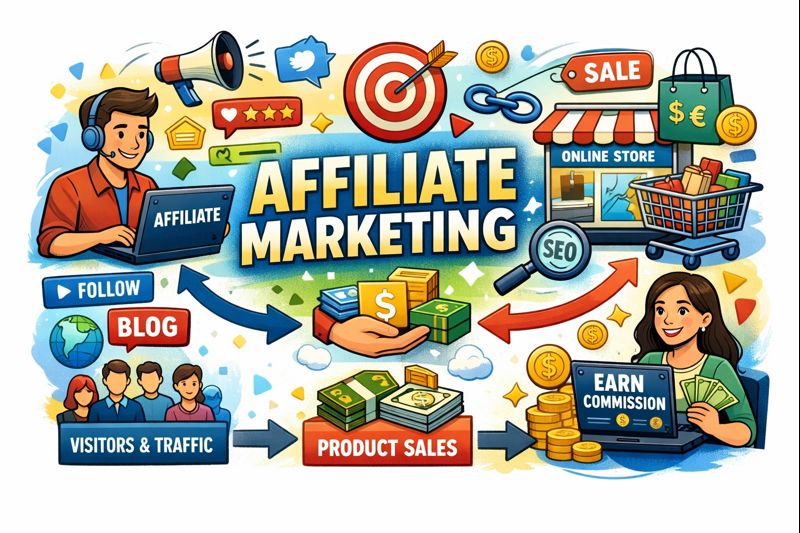
Affiliate marketing is often promoted as one of the easiest ways to make money online. Many people enter the field believing they can earn passive income with minimal effort. However, the reality is very different. While affiliate marketing does work, most people fail before they ever see consistent results.
The problem is not the business model it’s the mindset, strategy, and execution.
One of the biggest reasons people fail is expecting quick results. Affiliate marketing is often marketed as “easy money,” which creates false hope. When beginners don’t see sales in the first few weeks, they lose motivation and quit.
Affiliate marketing is a long-term strategy. It requires time to build content, traffic, and trust. Those who succeed understand that results come gradually, not overnight.

Many beginners choose a niche just because it looks profitable. They don’t consider whether they understand the topic or can create content consistently.
When you choose a niche you don’t care about:
Successful affiliates usually pick niches they are interested in or willing to learn deeply.

People trust specialists, not general promoters. When you recommend too many unrelated products, users don’t know what to believe and they don’t buy.

Affiliate marketing depends heavily on trust. Many people promote products they have never used or don’t understand, just to earn a commission.
Readers can sense dishonesty. Without trust:
Trust is built through honesty, transparency, and helpful content.

One of the most common mistakes people make in affiliate marketing is focusing only on placing affiliate links instead of creating real value. Many beginners believe that the more links they add, the higher their chances of earning money. In reality, this approach often pushes readers away rather than encouraging them to buy.
Visitors come to a website looking for answers, solutions, or guidance not to be sold to immediately. When a page is filled with affiliate links but lacks useful information, it feels spammy and untrustworthy. Readers quickly sense that the content exists only to make money, not to help them.
People fail because they:
Affiliate links work best when they are naturally placed within helpful, informative content.
SEO is one of the strongest traffic sources for affiliate marketing, yet many beginners ignore it completely.
Without SEO:
Successful affiliates understand keywords, search intent, and content optimization.
Affiliate marketing rewards patience. Many people quit after publishing a few posts or running a few ads.
In most cases:
Those who quit early never give themselves a real chance to succeed.

Promoting products without knowing your audience is a major mistake. If you don’t understand:
you won’t recommend the right solutions. Successful affiliates deeply understand who they are helping.
Not all affiliate programs are reliable. Some offer:
Beginners often fail because they choose programs without research. Quality programs matter as much as quality content.
Social media traffic is unstable. Algorithms change frequently, and reach can disappear overnight.
People fail when they:
Websites and email lists provide more stable, long-term results.

Email marketing is one of the most powerful tools in affiliate marketing. Yet many beginners skip it.
Without an email list:
Successful affiliates build email lists to create long-term relationships.
Many people blindly copy strategies without understanding them. What works for one person may not work for another.
Affiliate marketing requires:
Those who don’t analyze their results often repeat the same mistakes.
Without tracking data, you don’t know what works. Many people fail because they never analyze:
Tracking helps you improve weak areas and scale what’s working.
Some beginners use spammy tactics, misleading claims, or policy-breaking ads. This leads to:
Affiliate marketing requires ethical and compliant practices.
The biggest reason people fail is mindset. Many treat affiliate marketing like a hobby instead of a business.
A real business requires:
Those who approach affiliate marketing professionally are far more likely to succeed.
Affiliate marketing can become a reliable source of passive income, but success does not happen automatically. Many people enter this field with high expectations and later feel disappointed when results don’t appear. The issue is rarely the affiliate model itself it’s usually the way it is approached..
These challenges often include limited understanding of the products being promoted, skipping proper research, and failing to build trust with an audience. Without strong product knowledge, it becomes difficult to create convincing and helpful content.
Another common problem is avoiding investment in the right tools. Analytics, SEO tools, and content optimization platforms play a major role in improving performance. Relying on a single affiliate program can also limit earning potential, while transparency such as clearly disclosing affiliate links is essential for maintaining credibility and long-term trust.
Finally, many marketers overlook the importance of social proof. Real feedback, user experiences, and honest opinions help readers feel confident in their decisions. Affiliate marketing works best when it is built on honesty, value, and consistency. Those who focus on helping their audience first are far more likely to see meaningful and lasting results.






[…] Why does Google crawl my article but not index it? […]